We set out on an adventure into the complex realm of football betting, embracing strategic analysis instead of just chance. Our shared goal is to analyze the factors that lead to profitable betting, turning it from a risk into a deliberate endeavor. This is more about increasing our chances & prudently managing our bankroll than it is about guaranteeing wins, as this idea is mythical in all forms of gambling. We must first acknowledge the complexity of football as a sport in order to fully comprehend how to approach football betting with a strategic mindset. It’s not just about which team has the best players; it’s a complicated interaction of many variables that change over time. The subtle differences between form & momentum.
We’ve seen that form is an important metric, but it goes beyond recent victory figures. Winning one game against a formidable opponent is more impressive than a team winning three straight against struggling opponents. On the other hand, momentum relates to a squad’s confidence and mental state. Even if the opposition hasn’t been of the highest caliber, a team on a winning streak frequently plays with a different energy.
For those interested in enhancing their football betting strategies, a valuable resource can be found in the article on understanding the M8Bet casino free credit. This piece provides insights into how to leverage bonuses and promotions effectively, which can significantly impact your betting experience. To explore this further, you can read the article here: Understanding M8Bet Casino Free Credit.
Examining Current Performance: We examine the caliber of opponents encountered in recent games. A close victory over a team in the top four is frequently a better sign of good form than a decisive win over a team at the bottom. Home versus.
Away Form: We are aware that a team’s performance can differ dramatically between home & away games. A number of factors come into play, including crowd support, pitch familiarity, and travel fatigue. Goal Scoring and Conceding Trends: We examine goal differentials in addition to wins and losses, searching for trends in a team’s scoring and—most importantly—conceding rates, especially in particular game scenarios (e.g. “g.”. objectives (early and late).
Try Now and experience the amazing features of our new product.
Reports on injuries and depth of squad. A team’s capabilities can be drastically changed by the absence of a key player or even a few squad members. In addition to the injury list, we also look at how much a manager can actually replace those players without a noticeable decline in quality.
For those interested in enhancing their football betting strategies, exploring various analytical approaches can be incredibly beneficial. One insightful resource that delves into the intricacies of betting analysis is available in this article. You can read more about it here, where it discusses the importance of understanding odds and the impact of team statistics on betting outcomes. This knowledge can significantly improve your chances of making informed decisions when placing bets.
| Match | Home Team | Away Team | Result | Over/Under 2.5 Goals | Both Teams to Score |
|---|---|---|---|---|---|
| 1 | Liverpool | Manchester City | 2-1 | Over | Yes |
| 2 | Real Madrid | Barcelona | 0-0 | Under | No |
| 3 | Bayern Munich | Borussia Dortmund | 3-2 | Over | Yes |
Impact of Key Player Absences: We determine which players—not just goal scorers but also defensive linchpins, inventive midfielders, or powerful leaders—are genuinely essential to a team’s system. Tactical execution & team chemistry may suffer from their absence. Evaluating Squad Rotation: Squad rotation is typical for teams that compete in several tournaments. We evaluate how strong their bench is and how well reserves can fill in without sacrificing output.
Injury-Related Management Philosophy: While some managers are skilled at adjusting their strategies, others find it difficult. This facet of managerial proficiency is taken into consideration. Managerial influence and tactical approaches.
A team’s on-field strategy is designed by managers. We take into account their tactical preferences, adaptability, and impact on player morale. While an attacking-minded manager aims to control possession & generate many opportunities, a pragmatic manager might place more importance on defensive solidity. Finding Preferred Formations & Styles: We look for recurrent playing styles & formations.
Knowing whether a team prefers possession-based play, counterattacking football, a deep block, or a high press aids in forecasting game flow. Adaptability to Opponents: Skilled managers can modify their strategies to take advantage of opponents’ flaws or counteract their advantages. We search for proof of this flexibility, particularly in the face of diverse opposition.
Managerial Track Record and Pressure: A manager’s decision-making and, in turn, the performance of the team can be impacted by their past successes and failures as well as the pressure they are currently under. Our approach greatly depends on quantitative analysis, going beyond qualitative observations. Football increasingly offers a plethora of data that, when properly interpreted, can reveal patterns and odds. Anticipated Objectives (xG) and Anticipated Support (xA).
Our knowledge of chance creation and conversion has been completely transformed by these sophisticated metrics. They let us evaluate the caliber of opportunities a team creates & gives up, regardless of whether those opportunities led to goals. Understanding Shot Quality: Based on variables like shot location, body part used, and type of assist, we use xG to assess the chance that a shot will result in a goal. This makes it easier to distinguish between a team that consistently creates high-probability opportunities & one that scores from fortunate long shots.
Assessing Offensive and Defensive Prowess: We can determine which teams are outperforming or underperforming in front of goal by comparing their actual goals scored against their xG. This can reveal future regression or improvement. In a similar vein, xGA (expected goals against) enables us to evaluate defensive strength in addition to clean sheets. Forecasting Future Performance: Although xG isn’t a magic bullet, persistently high xG for and low xG against frequently correlate with long-term success, indicating a team’s fundamental strength.
H2H statistics (head-to-head) with context. We remain critical even though traditional H2H records can be helpful. A five-year-old result with completely different squads and managerial teams is not very predictive. Recent H2H Encounters: We give priority to H2H data from the most recent or current seasons, particularly when the teams’ core personnel and managerial philosophies are comparable.
Underlying Performance in H2H: To determine which team actually dominated the play, we look at underlying statistics from previous H2H games, such as shot counts, xG, & possession. Situational Context: We take into account the particulars of previous head-to-head games, such as whether one team rested players for another tournament or whether there was a serious injury crisis. These elements have the potential to distort past outcomes. Resources and Analytical Tools.
There are many analytical tools available in today’s betting environment. To make sure our analysis is thorough and knowledgeable, we use a range of platforms and data providers. Specialized Football Statistics Websites: We frequently visit websites that provide comprehensive statistics, such as player ratings, advanced metrics, and past data. Betting Exchange Data: As an additional check on our own analysis, analyzing the liquidity and odds movements on betting exchanges can occasionally provide insights from the collective market intelligence.
News Aggregators and Expert Analysis: We follow reputable sports journalists and analysts who frequently offer insightful, nuanced information, especially when it comes to team news and internal dynamics, while keeping a healthy skepticism towards opinion. Value betting is the fundamental component of our strategy. This is about finding situations where the bookmaker’s odds are higher than our own estimated probability of an event happening, not about selecting winners. Finding Disparities.
We do this by calculating our own probability for a result without consulting the bookmaker, then comparing it to their implied probability. Potential value is seen where our probability is higher. Creating Personal Probabilities: This calls for a strong analytical framework in which we give different outcomes probabilities based on all the previously mentioned variables. This is a skill that has been refined through careful data analysis and time. Converting Odds to Implied Probability: We know how to change decimal odds into implied probabilities (e.g.
The g. A 50% chance is implied by odds of two points. This enables a direct comparison with our evaluations. Identifying Overlooked Factors: Value frequently emerges when bookmakers or the general public have misjudged a particular aspect of a match or missed an important piece of information. This could be an anomaly in form, an underreported injury, or an underappreciated tactical change.
Market efficiency & its role. We recognize that the majority of the easily accessible information is already factored into the odds because the betting market is generally efficient. In order to find value, we must look further.
Chasing Contrarian Views (with Evidence): Occasionally, the market will strongly favor one team, which results in exaggerated odds for the underdog. This can be useful if our analysis indicates the underdog has a better chance than their odds suggest. But this is always supported by our own data, not just a “hunch.”. Taking Advantage of Niche Markets: Unknown leagues or more niche betting markets (e.g. (g). Due to fewer eyes and data, it can occasionally be less effectively priced (number of corners, particular player to receive a card, etc.).
Timing the Bet: The odds can change dramatically in the run-up to a game. We sometimes wait for team news or keep an eye on market movements in order to place our bets when we think the odds offer the best value. Steer clear of “gut feeling” wagers. Systematic analysis is what we are dedicated to. Even though intuition can occasionally be useful, we specifically steer clear of making choices based only on feelings or unconfirmed suspicions.
Every bet we make needs to have a sound, data-driven justification. Discipline in Execution: Long-term success depends on adhering to our analytical process even in the face of alluring “obvious” bets that have no underlying value. Record-keeping: We keep thorough records of every wager we make, including the justification, the odds, and the outcomes. This enables us to evaluate our performance in retrospect, pinpoint the advantages & disadvantages of our plan, and continuously improve it. Learning from Losses: When you bet, you will inevitably lose.
Rather than seeing them as failures, we see them as teaching moments that force us to reexamine our analysis and find any possible weaknesses in our approach. Without disciplined bankroll management, even the most clever analysis will fail. This is the foundation of sustainable betting, guaranteeing that our money is shielded from fluctuations and unanticipated results.
establishing our betting bankroll. We set aside a certain amount of money for betting that we are comfortable losing before making any wagers. This is known as our bankroll. Living expenses shouldn’t require this money.
Separation from Personal Finances: In order to avoid overspending & to make sure that losses do not affect important financial obligations, we strictly keep our betting bankroll separate from our personal finances. Realistic Expectations: We are aware that variance will cause losing streaks even when we have a significant analytical advantage. A strong bankroll is made to withstand these swings without driving us out of the game. Plan for Staking: The Unit System. To control the size of our bets in relation to our bankroll and our perception of a wager’s value, we use an organized staking strategy, usually utilizing a unit system.
Fixed Dimensions (e.g. “g.”. 1-3 percent of Bankroll): We risk a constant portion of our entire bankroll, usually between 1 and 3 percent, for the majority of wagers where we find value. This guarantees that we won’t lose a lot of money on a single losing wager. Variable Unit Size (Value-Based): We may increase our stake proportionately for wagers that we believe have a particularly strong edge and high value, but we never go over a predetermined maximum percentage (e.g. (g). 5%).
Extreme caution and strong conviction are used in this. Preventing Overstretching: We never raise our stakes in an attempt to cover losses. This is a typical mistake that can swiftly destroy a bankroll. Reinvesting and Taking Profits Out. A strategy for controlling profits and withdrawals is also part of prudent bankroll management.
Reinvesting for Growth: Assuming ongoing success and a steady advantage, a portion of our profits can be put back into the bankroll, allowing it to expand and eventually enabling larger unit stakes. Establishing Withdrawal Thresholds: When it comes to withdrawing profits, we set particular thresholds or frequency. Instead of just being an abstract figure in a betting account, this helps to lock in gains and guarantees that our betting activities positively contribute to our larger financial goals. Reducing Emotional Decisions: It is normal but ineffective to be tempted to take everything out after a winning run or to place bigger bets after a significant victory. We reduce these emotional impulses with our methodical approach.
Football is a dynamic sport that is always changing. This must be reflected in the way we approach betting, adopting a mindset of constant learning & adjustment. Analysis & Review of the Match. Regardless of the results of our wagers, we perform a comprehensive post-match analysis following each game. Here, we develop, hone, and enhance our prediction models.
Assessing Our Forecasts: We contrast the actual game events with our pre-match analysis and forecasted results. Did we overlook anything? Was our evaluation correct?
Finding Errors and Biases: We actively search for any logical errors or potential cognitive biases that might have affected our choices. Was there a sentimental component? Did we focus too much on one aspect? New information is added to our knowledge base with each match. Based on recent results, we update our knowledge of player types, tactical trends, managerial influences, and team strengths. adjusting to changes in the market.
The betting market is constantly changing. As bookmakers improve their models and the market’s collective wisdom grows more sophisticated, our tactics must change to stay effective. Tracking Odds Movements: We keep an eye out for notable changes in odds, both before & during a game, as these may indicate fresh information or a market reevaluation. Examining Novel Betting Markets: As novel betting prospects arise (e. “g.”.
player props, particular in-game events), we investigate and assess their possible worth. Keeping Up with Football Developments: New tactical innovations, rule modifications, and the emergence of fresh talent all have an impact on the game. To make sure our presumptions hold true, we stay informed. Gaining knowledge from the community (carefully).
We interact with respectable betting communities & expert analysis, treating it as supplemental information rather than final advice, even though our core analysis is confidential. Diverse Views: Experimenting with different analytical techniques can occasionally reveal weaknesses in our own methodology or present us with fresh approaches to data interpretation. Finding Consensus and Deviation: Knowing the mainstream perspective can help us identify areas where our analysis deviates, which may point to an important detail that was missed or, on the other hand, a mistake in our own judgment that needs to be reevaluated. Avoiding “Touts” and Unverified Tips: We have a strong policy against depending on self-described “gurus” or unverified betting tips because they frequently lack a solid analytical foundation and are intended for short-term gain rather than long-term strategy.
Analysis, improvement, & methodical execution are all ongoing processes in our football betting journey. It is about applying strategic principles diligently to improve our long-term prospects in this difficult but intellectually fascinating field, not about instant wealth or perfect forecasts.
.
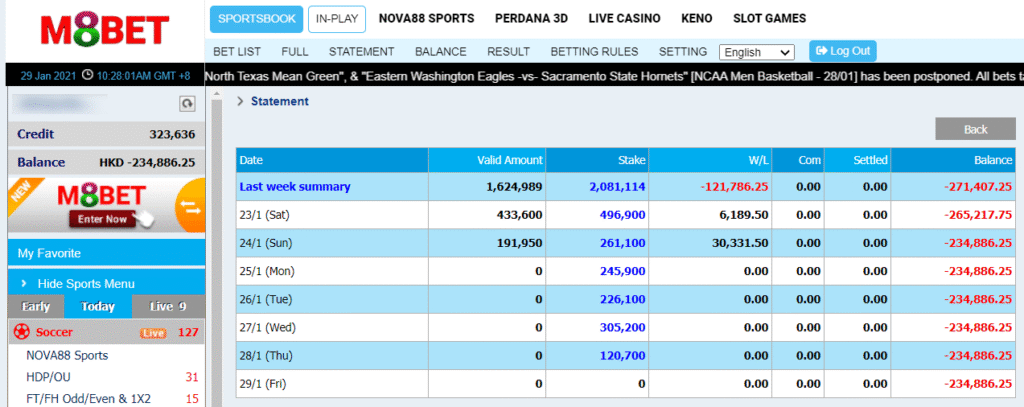
Free credit offer
FAQs
What is football betting analysis?
Football betting analysis is the process of evaluating and predicting the outcome of football matches in order to make informed betting decisions. It involves studying various factors such as team performance, player statistics, historical data, and other relevant information to determine the likelihood of a particular outcome.
What are the key factors considered in football betting analysis?
Key factors considered in football betting analysis include team form, head-to-head records, player injuries, weather conditions, home and away performance, and other statistical data such as goals scored, possession, and shots on target. These factors help bettors make more accurate predictions.
How is football betting analysis used in sports betting?
Football betting analysis is used by sports bettors to gain an edge in predicting the outcome of football matches. By analyzing various factors and statistics, bettors can make more informed decisions when placing bets, increasing their chances of winning.
What are the benefits of football betting analysis?
The benefits of football betting analysis include improved decision-making when placing bets, increased chances of winning, and a better understanding of the factors that influence the outcome of football matches. It also allows bettors to identify value bets and potential opportunities for profit.
Where can I find resources for football betting analysis?
There are various resources available for football betting analysis, including sports websites, statistical databases, expert analysis and predictions, and betting forums. Additionally, many sportsbooks offer statistical data and analysis to help bettors make informed decisions.